COLLECTION BUYING GUIDEHow to compare air hockey dining tables
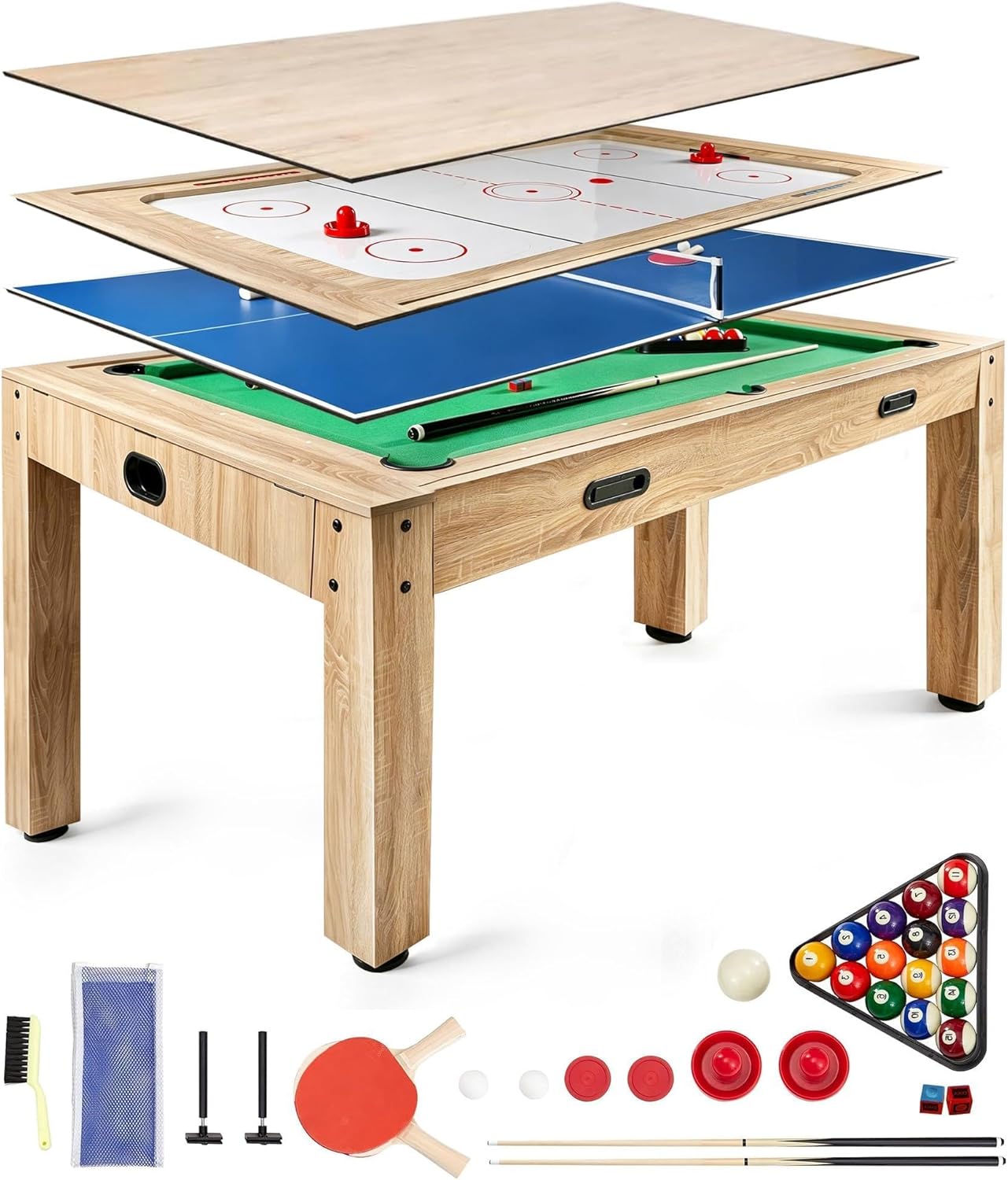
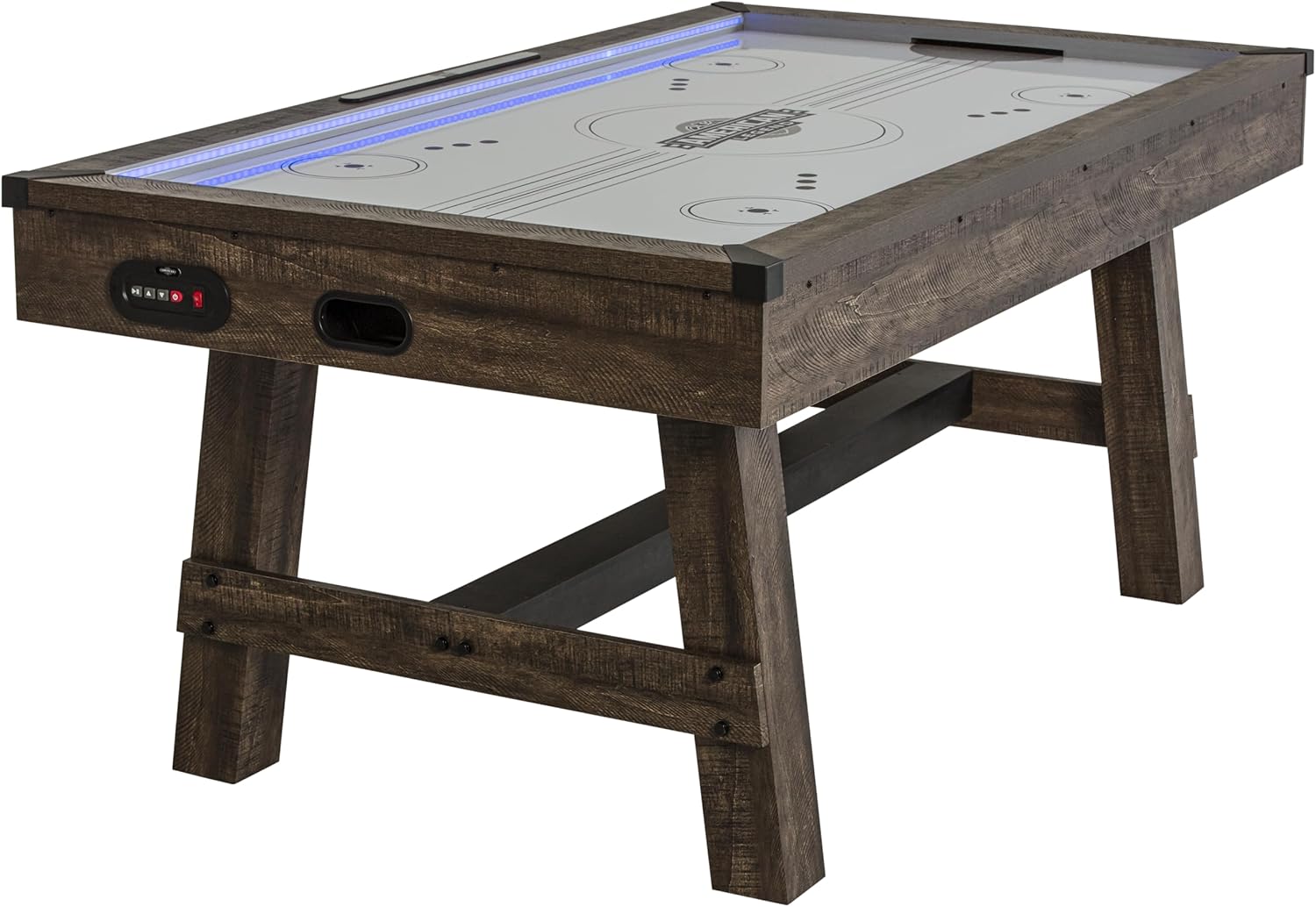
Air Hockey Dining Tables share a search intent, but they do not automatically share the same playing quality, footprint or ownership burden. Start by deciding what would disqualify a table: insufficient room, wrong player height, no storage path, unsupported outdoor use, or a format that makes air hockey secondary. That removes poor fits before attractive photos or extra features cloud the decision.
The central tradeoff
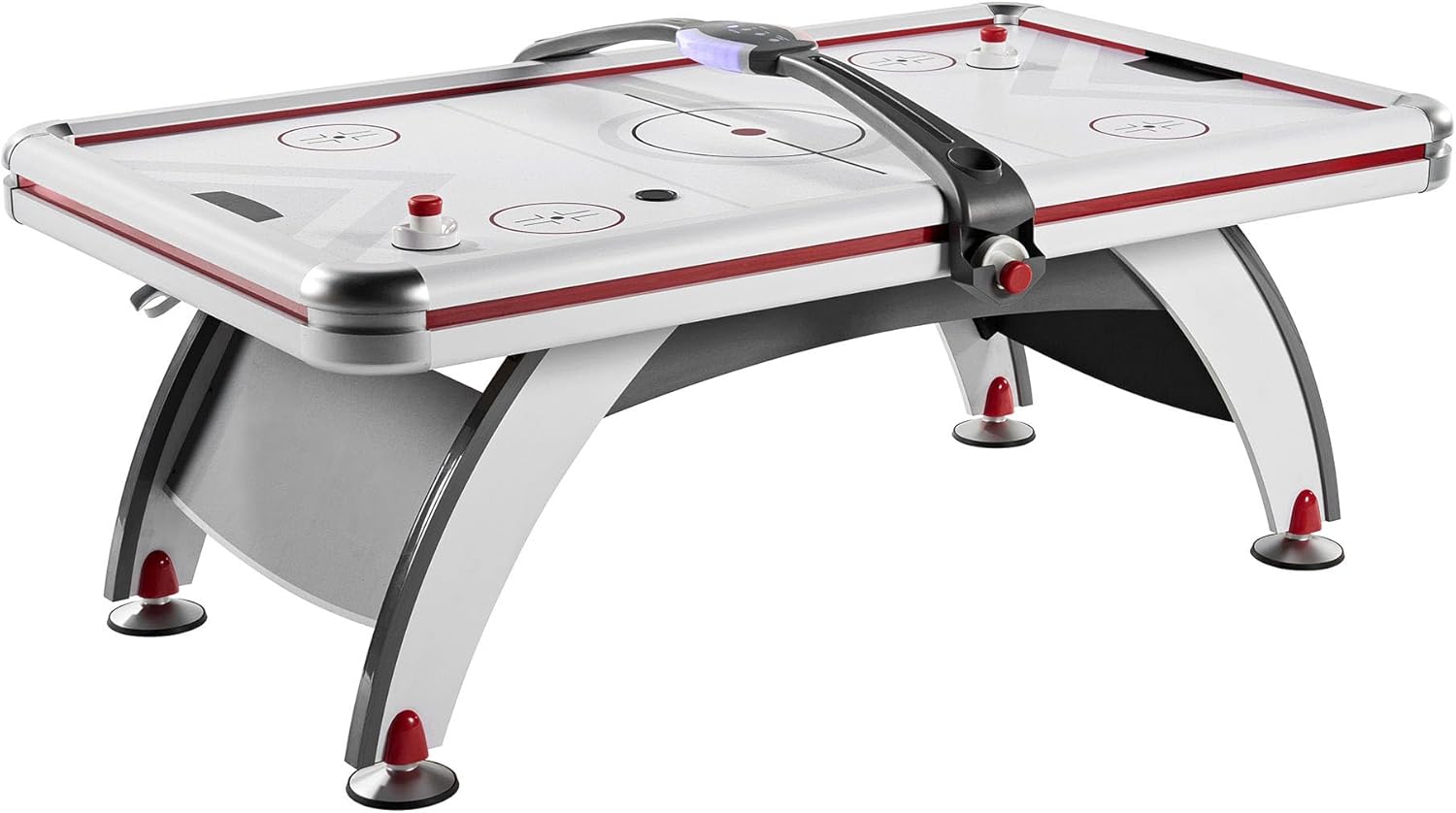
Furniture finishes can improve the room but add weight or cost without necessarily improving airflow. The right choice is the one whose compromise matches the room and frequency of play. A weekly family game does not require the same cabinet as a school recreation room, and a product that is easy to move may not feel as planted during aggressive adult play.
Room fit comes before feature fit
Use the exact assembled dimensions whenever published. Add at least 36 inches beyond each player end and 12 inches along each side for a minimum planning footprint. Increase that to roughly 42 inches at the ends and 18 inches at the sides for a more comfortable starting point. Those are site planning recommendations rather than code requirements, and furniture, doors and unusual player needs can require more.
Check the delivery route independently. Cabinet weight, removable legs, carton size and stair turns determine whether the product can reach the room. Assemble large tables close to the final position when the manual supports that workflow.
Airflow and playing surface
A corded power specification confirms a power source, not blower performance. Useful documentation describes forced-air play, the surface and sometimes the number or design of blowers. If the listing does not publish airflow output, we do not guess. A clean, level surface and correctly weighted puck remain part of the system.
Do not use furniture wax, silicone or another coating as a universal fix for slow play. Coatings can block perforations. Start with the model manual, a clean dry puck and surface, accessible intake checks and careful hole cleaning using the approved method.
Scoring, lighting and storage
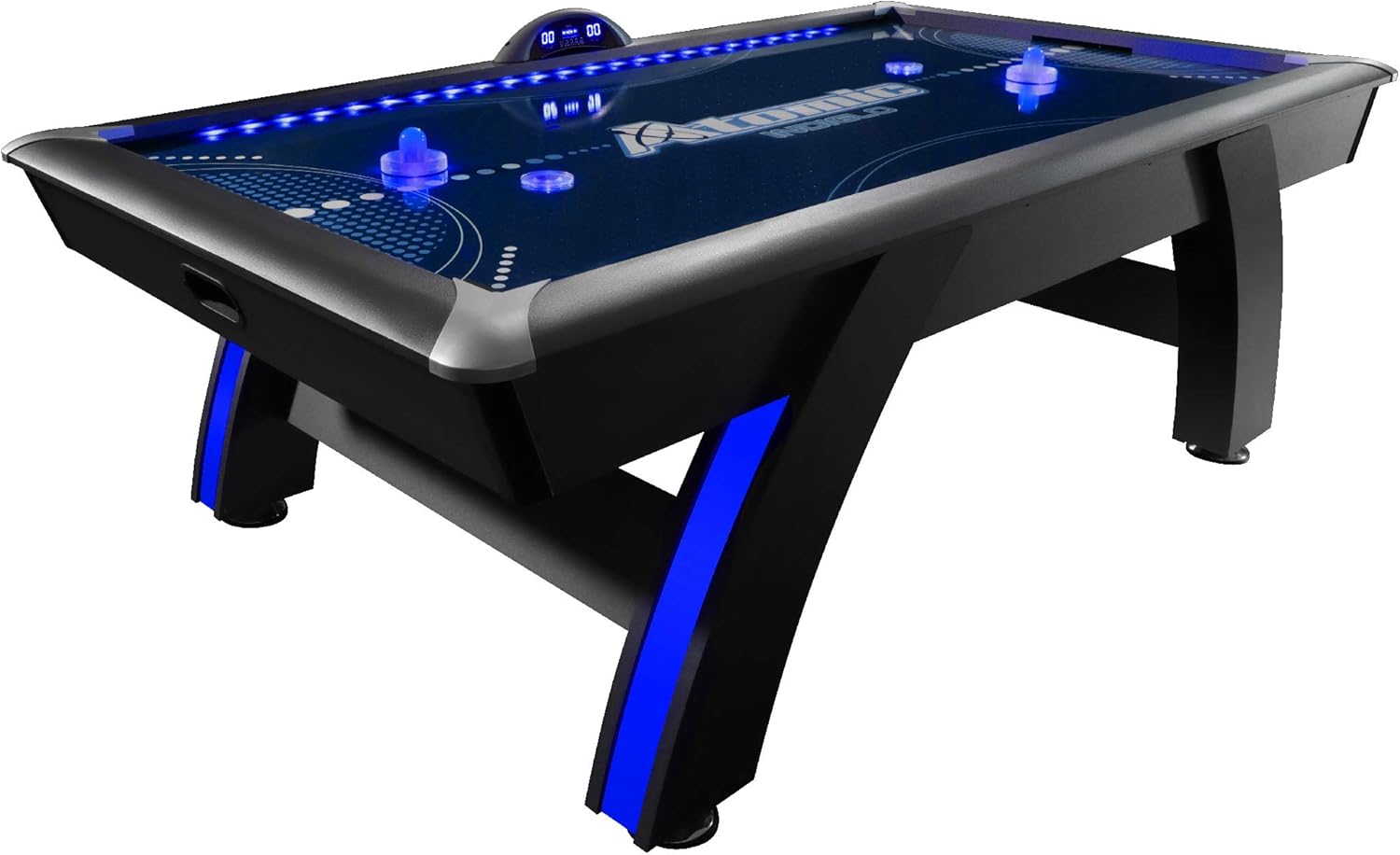
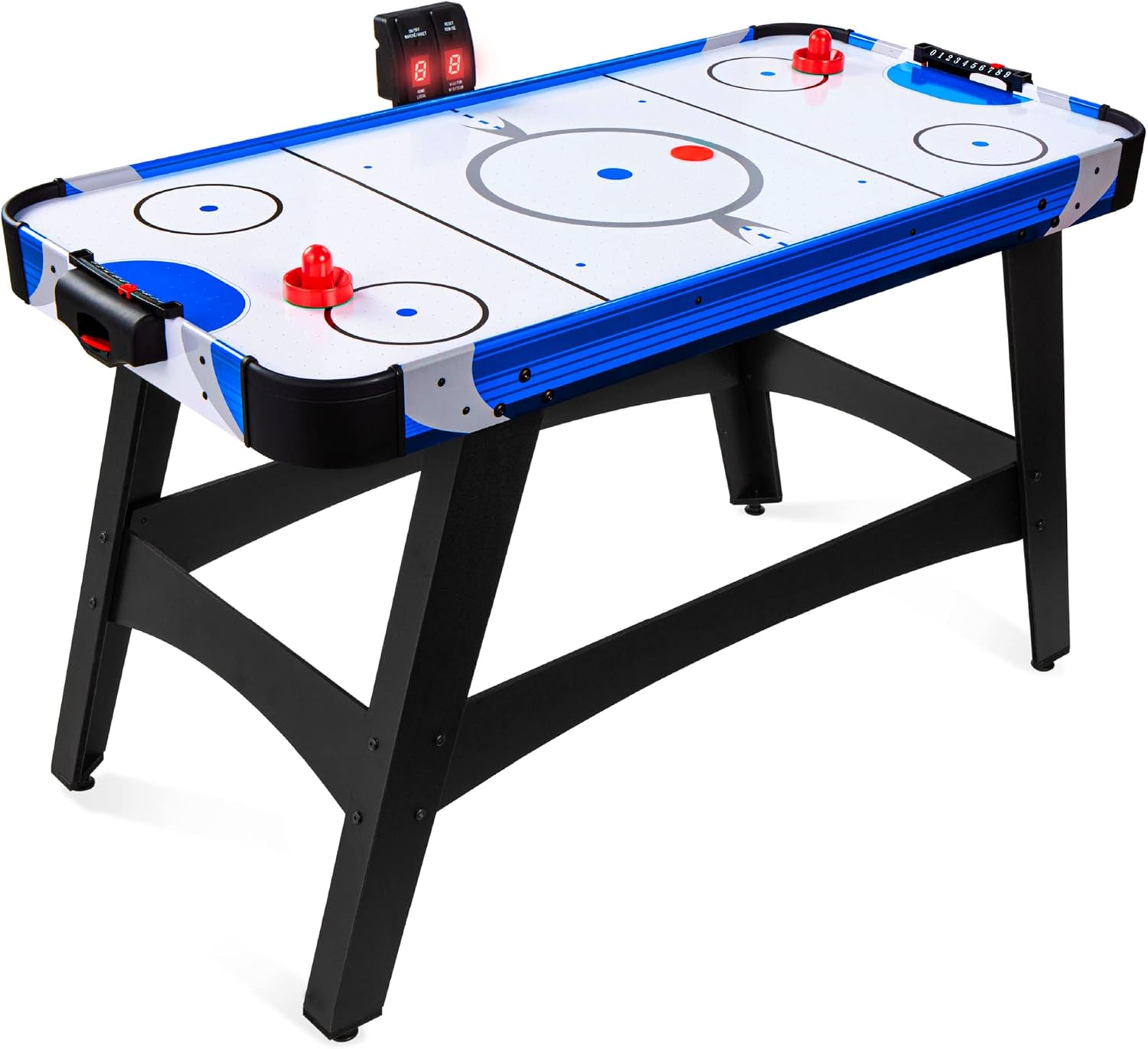
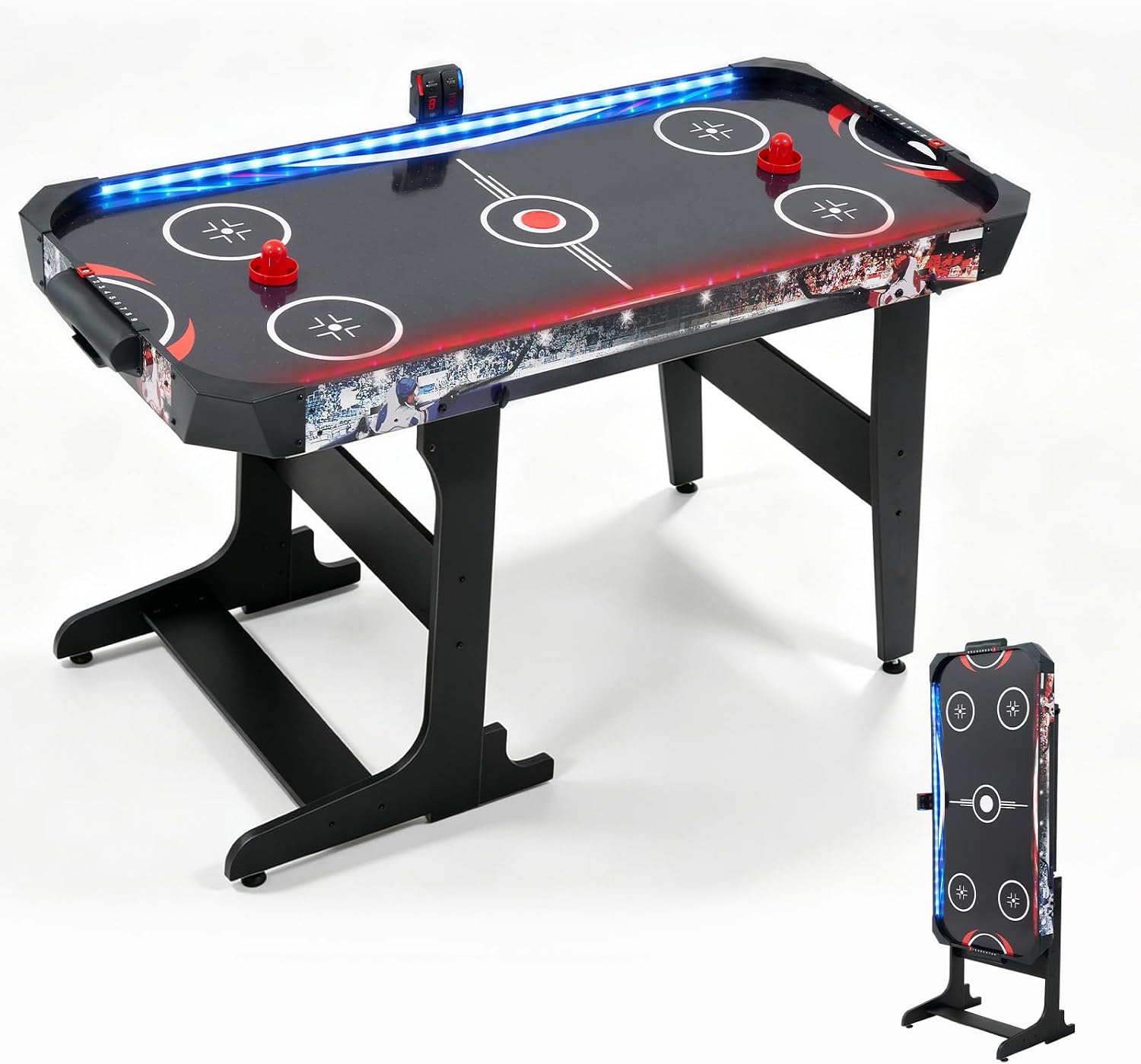
Electronic scoring reduces manual tracking but creates another powered subsystem. Manual scoring is simpler. Lighting adds atmosphere but should not outweigh cabinet dimensions, leg stability and the playing system. Folding tables need positive locks and a storage location that can accept the folded dimensions and weight.
Collection checkpoint: Compare playfield material, cabinet dimensions, leg construction and the exact finish shown for the selected listing.
How this collection is maintained
We include only listings with a verified Amazon ASIN and exact image. Prices, sellers and availability can change, so those stay on the live Amazon page. Product titles are normalized for readability but remain tied to the identified listing. Specifications show a verification date and use “not published” where the source does not expose a field.